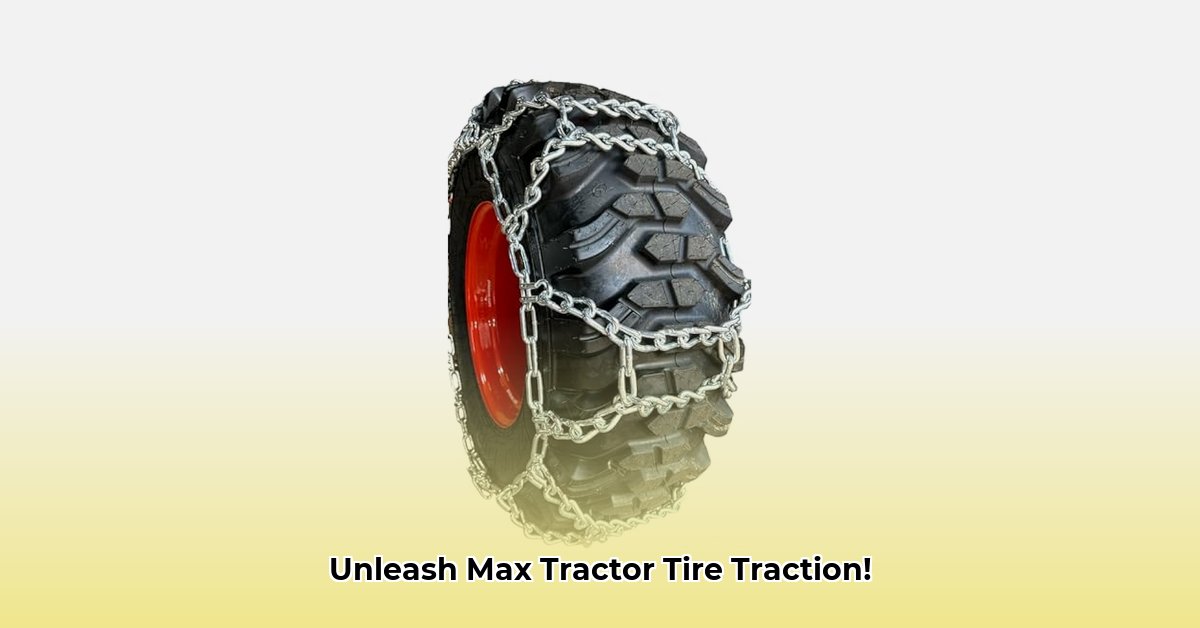
Getting stuck in mud or snow is every farmer's worst nightmare. 13.6 x 28 tractor tire chains are your solution for conquering tough terrain and maintaining productivity. This comprehensive guide will equip you with the knowledge to select, install, and maintain these essential tools, maximizing traction and minimizing downtime. For more information on tractor tire tubes, check out this helpful resource: tire tube information.
Understanding 13.6 x 28 Tractor Tire Chains
13.6 x 28 chains are specifically designed for larger agricultural tires, providing increased traction in challenging conditions such as mud, snow, and ice. Understanding the different types and their construction is crucial for correct selection and optimal performance.
Chain Types: Standard vs. Duo-Grip
Two primary types of chains exist: standard and Duo-Grip. Both are crafted from durable, case-hardened steel (meeting ASTM E18 standards for strength and safety), but their designs differ significantly impacting traction capabilities.
Standard chains offer reliable traction in moderately challenging conditions. They feature a simpler design, making them a cost-effective solution. Duo-Grip chains, conversely, boast superior grip, thanks to their added cross-chains. Ideal for extreme conditions like deep mud or ice, they provide significantly enhanced traction.
Which type is right for you? The choice depends on your typical working conditions. Farmers operating primarily on well-maintained land may find standard chains sufficient. Those frequently encountering challenging terrain requiring maximum traction should opt for Duo-Grip chains.
Chain Construction and Materials
All high-quality tractor tire chains, regardless of type, should adhere to ASTM E18 standards. This ensures the chains are made from durable, case-hardened steel capable of withstanding significant stress without breaking. The chain links are forged to create strong interconnections and are often galvanized to prevent corrosion, extending the chains' lifespan. The cross-chains, particularly prominent in Duo-Grip designs, significantly increase surface contact with the ground, enhancing traction.
Measuring Your Tires: A Precise Approach
Accurate tire measurements are paramount for proper chain selection. Incorrect sizing leads to ineffective traction or even potential damage to both the chains and the tires.
Step-by-Step Measurement:
- Clean the Tire: Remove all mud, snow, or debris from the tire's surface for accurate readings.
- Measure Diameter: Using a flexible measuring tape, measure the tire's diameter from top to bottom through the center. Ensure the tape remains taut for accurate results.
- Measure Width: Measure the widest point of the tire. Maintain tape tension for precision.
- Consult Sizing Chart: Use a supplier's sizing chart (often available online) to determine the appropriate chain size based on your measurements.
Why Accurate Measurements Matter: Chains that are too small won’t provide sufficient grip. Chains that are too large can be dangerous— causing damage to your tires, rims, or the chains themselves, and potentially creating a hazardous situation.
Selecting the Right Chains: A Decision Tree
Choosing the appropriate chains depends on two key factors: terrain conditions and tire tread depth.
Decision Tree:
| Terrain Condition | Tire Tread Depth | Recommended Chain Type |
|---|---|---|
| Light Mud/Snow | Shallow | Standard |
| Moderate Mud/Snow | Shallow | Standard or Duo-Grip |
| Deep Mud/Heavy Snow | Shallow | Duo-Grip |
| Light Mud/Snow | Deep | Duo-Grip |
| Deep Mud/Heavy Snow | Deep | Duo-Grip |
| Icy Conditions | Any | Duo-Grip |
Installing 13.6 x 28 Tractor Tire Chains: A Step-by-Step Guide
Proper installation is crucial for maximizing traction and preventing damage.
Step-by-Step Installation:
- Loosely Position: Drape the chains around the tire.
- Connect Cross-Chains: Secure cross-chains, ensuring even overlap.
- Tighten Evenly: Use tensioners to tighten the chains evenly. Avoid over-tightening.
- Check for Gaps: Eliminate gaps between chains and tire using tensioners.
- Final Check: Before operation, double-check security and positioning.
Maintaining Your Chains: Extending Lifespan
Regular maintenance increases chain lifespan and prevents costly replacements.
Maintenance Tips:
- Clean after Each Use: Remove mud and debris to prevent corrosion.
- Regular Inspection: Check for wear, damage, or broken links before each use.
- Proper Storage: Store in a clean, dry location to prevent rust.
Troubleshooting Common Issues
Even with proper care, issues can arise.
Common Problems and Solutions:
- Slipping Chains: Check tension; tighten or replace worn chains.
- Broken Chains: Replace immediately; never repair a broken chain.
Safety Precautions: Prioritize Safety
Safety should always be your top priority.
Safety Guidelines:
- Off-Road Use Only: Never use chains on paved roads.
- Cautious Installation and Operation: Follow instructions carefully.
- Reduced Speed Limits: Maintain reduced speeds while using chains.
By following this guide, you'll be equipped to conquer any terrain with confidence and efficiency. Remember, while this guide provides comprehensive information, always prioritize safety and consult professional advice for specific situations.